
How the 10% Texas Homestead Cap Works
About the Author: Nicole Schnell


Here’s what you need to know about the Texas homestead cap:
- The 10% Texas homestead cap limits annual increases in the taxable value of a primary residence, protecting homeowners from sharp property tax hikes.
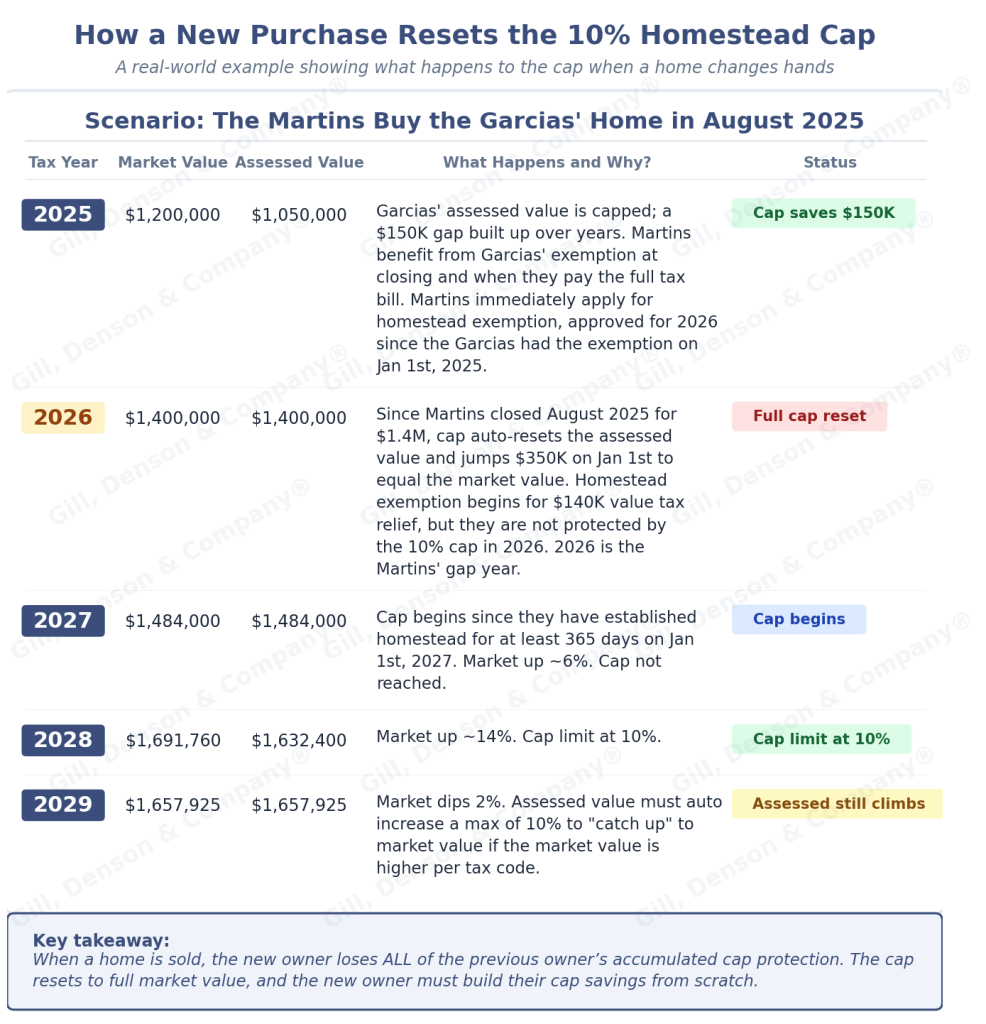
- While you may apply for homestead exemptions soon after purchasing a home, the 10% cap only starts 365 days after January 1 of the first tax year you claim the exemption.
- Significant home remodeling is excluded from the cap, potentially increasing the taxable value; keep that in mind when planning improvements.
- Gill, Denson & Company can help you navigate the 10% cap, exemptions, and the impacts to your property tax bill, and protest if needed.
What Is the Texas Homestead Cap?
One of the most common questions we receive from homeowners is about the 10% Texas homestead cap. Many people want to know how it affects their property taxes after purchasing a new home. Understanding how the cap and initial waiting period work can help you plan your property tax strategy and avoid surprises.
The 10% homestead cap is a Texas property tax law designed to protect homeowners from sharp increases in their property’s taxable value. It limits the amount the taxable value can increase to no more than 10% per year, as long as the property’s condition remains the same. This cap applies only to your primary residence with an active Texas homestead exemption.
When Does the 10% Cap Take Effect?
Unlike the exemption on taxable values, the 10% Texas homestead appraisal cap does not apply immediately. The cap only begins to protect your taxable value 365 days after January 1 of the year you first claim the homestead exemption. This means you must wait roughly one tax year before the 10% limit on annual taxable value increases kicks in.
Property taxes can increase significantly during this waiting period as the taxable value updates to reflect the current market value. Your first year in the home is now your base value for the cap. It’s crucial that you protest your property taxes during the waiting period to establish the lowest possible base value before your new homestead cap kicks in the following tax year. Otherwise, you risk the CAD increasing the market appraised value by more than 10% during this gap year, thereby raising the taxable value.
An easy rule to understand: If the deed changed ownership in the year preceding January 1st, the 10% cap will be removed and “reset.”
When Should I Apply for My Homestead Exemption?
As soon as you move into your new home, change your Texas DL address and apply for the homestead exemption. You can then receive the exemption benefit to reduce the taxable value starting that same tax year. This includes the general $140,000 homestead exemption, as well as other eligible exemptions.
What Happens If the Previous Owner Had a Homestead Exemption?
If the previous homeowner already had an exemption on January 1, that exemption will remain on your tax bill for the full year. If you apply mid-year, then your exemption benefits will take over on January 1 of the following tax year. Homestead exemptions cannot be transferred from one property to another unless you are older than 65 or a disabled veteran.
For example, if the previous homeowner is a senior and removed the exemption retroactively to transfer it to their new property, you will not see the existing exemption on your bill. Your exemption benefits will take effect immediately upon acceptance, as discussed above. If you are transferring your 65 and older exemption or buying a house previously owned by a senior, there are complex considerations. We recommend contacting our tax experts for situational guidance.
If the previous homeowner did not have a homestead exemption in place, then your newly applied exemption is prorated. It will apply for the portion of the year starting from the exemption acceptance.
Common Example:
How Does Remodeling Affect the Cap?
If you remodel or make substantial improvements to your home, that will not be included in the 10% cap. The Texas homestead cap protects property owners from sharp market value increases from year to year, but explicitly excludes any increases due to property renovations or new additions. This is because changes in the property’s condition can increase its appraised value beyond the capped amount. It’s important to keep that in mind when planning renovations and understand how they will affect your taxable value and cap amount.
How Gill, Denson & Company Can Help
Navigating the 10% Texas homestead cap and its waiting period can be confusing. This is especially true if you wish to complete home remodeling or renovations after your new purchase. Our team of Texas property tax experts is here to help you understand your specific case and ensure exemptions are applied correctly on your tax bill. Let us help you plan your property tax strategy and, if necessary, protest to minimize your tax burden.
If you have questions about the 10% Texas homestead cap or need assistance with lowering your property tax bill, contact us today. We’re ready to help you protect your home and your wallet.
 5 Commercial Property Owner Mistakes that Could Cost You Big in 2026